Ancestral Robots
COP30 (United Nations Climate Conference) - Belém do Pará | SESI Lab, Brasília | Brazil
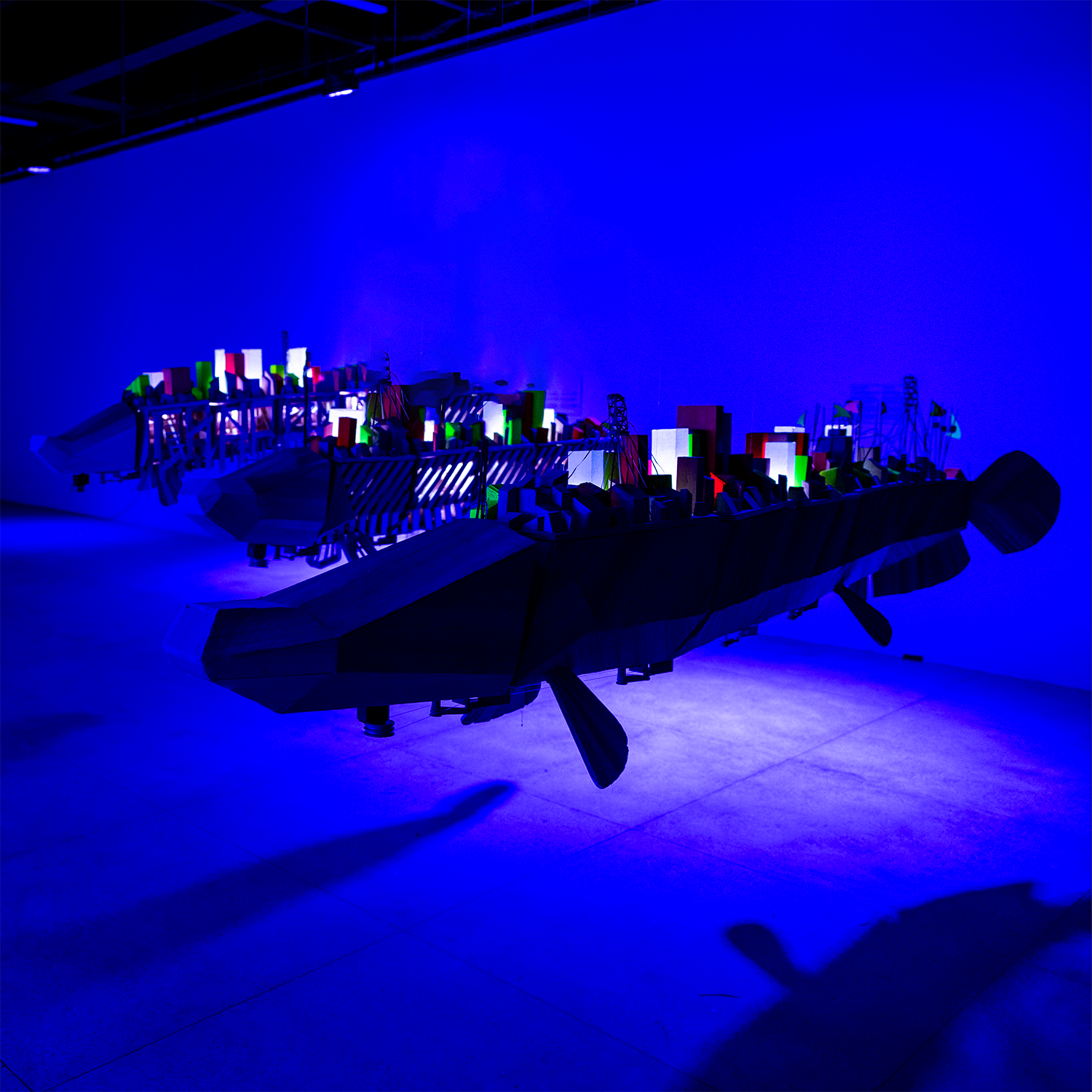
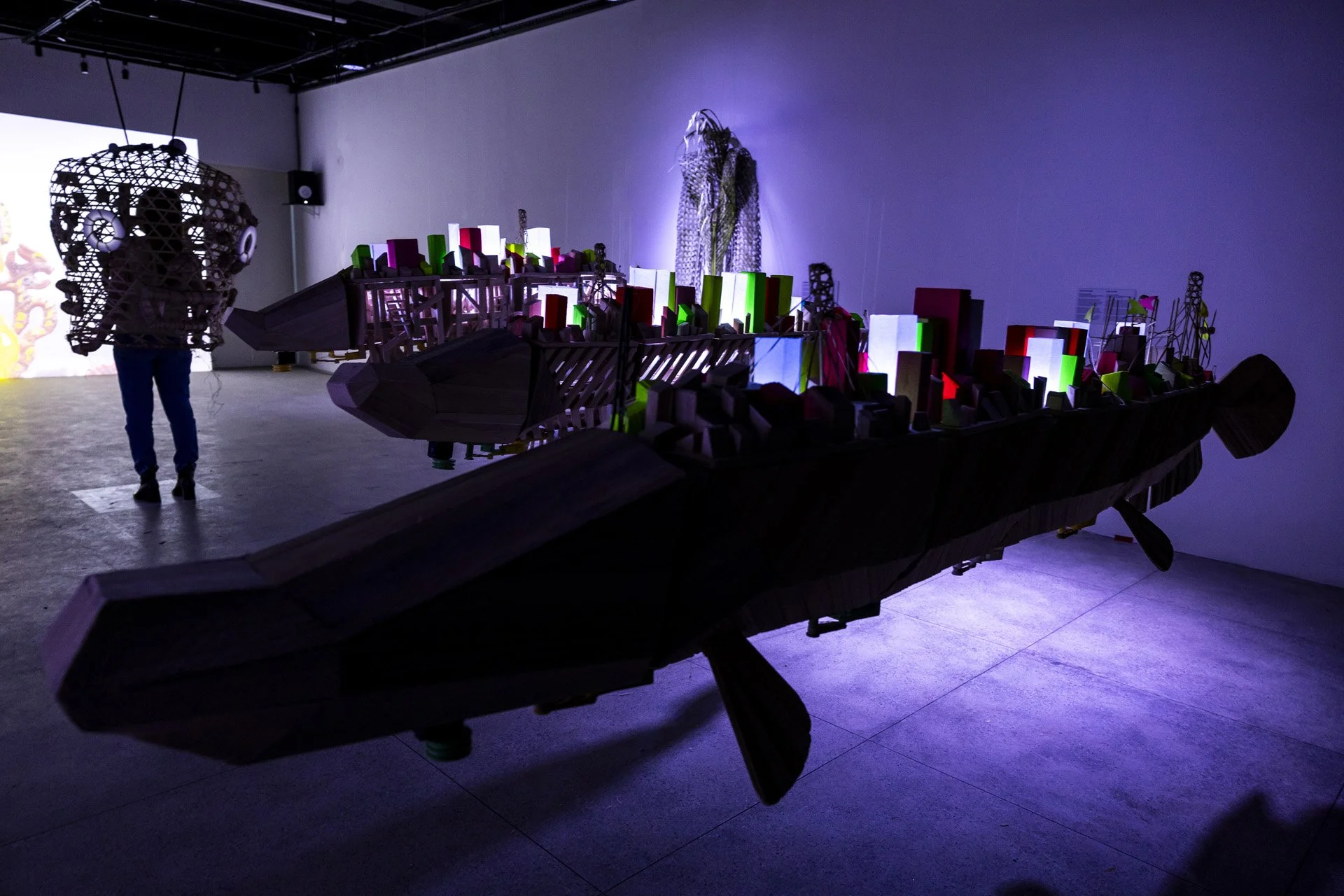
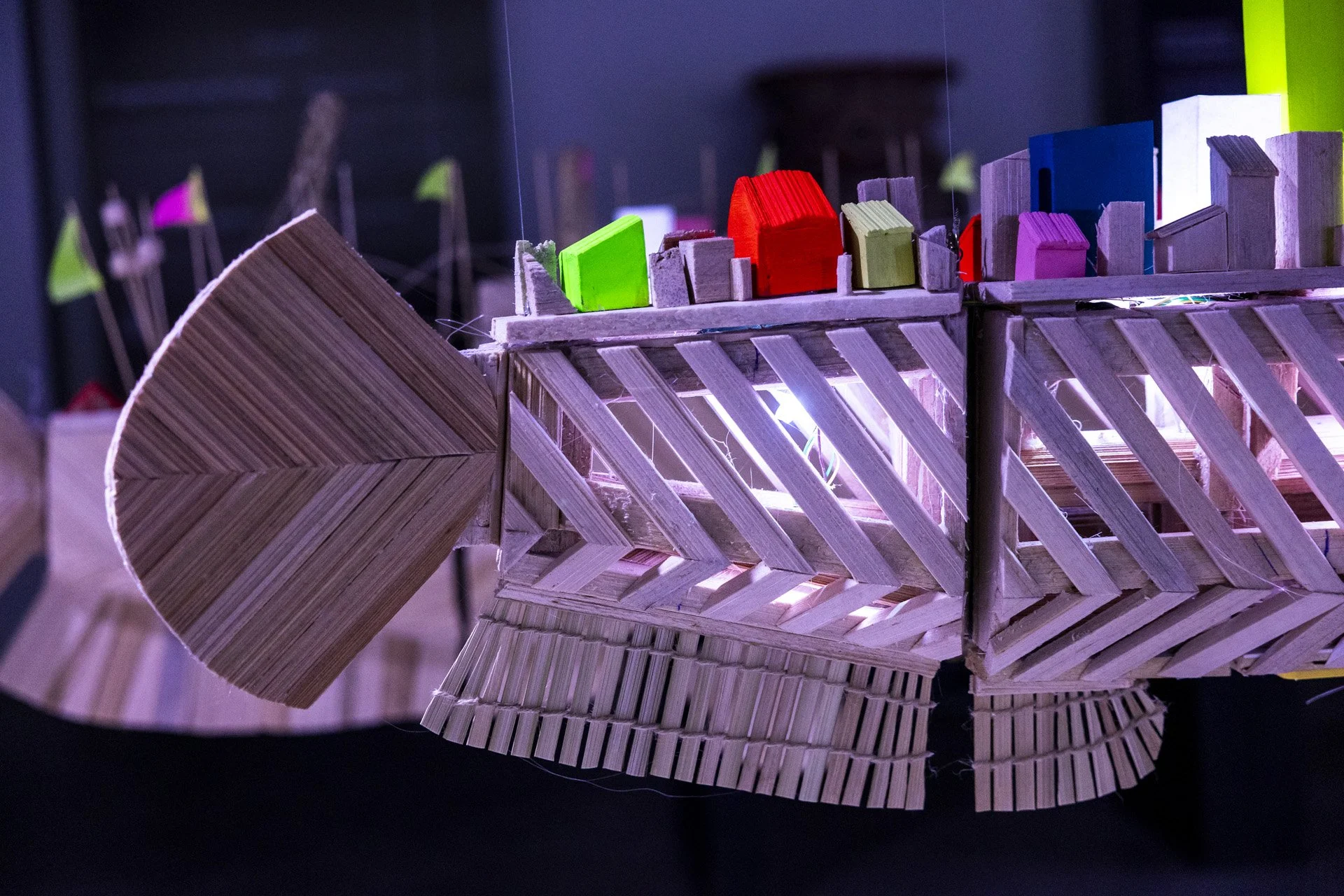
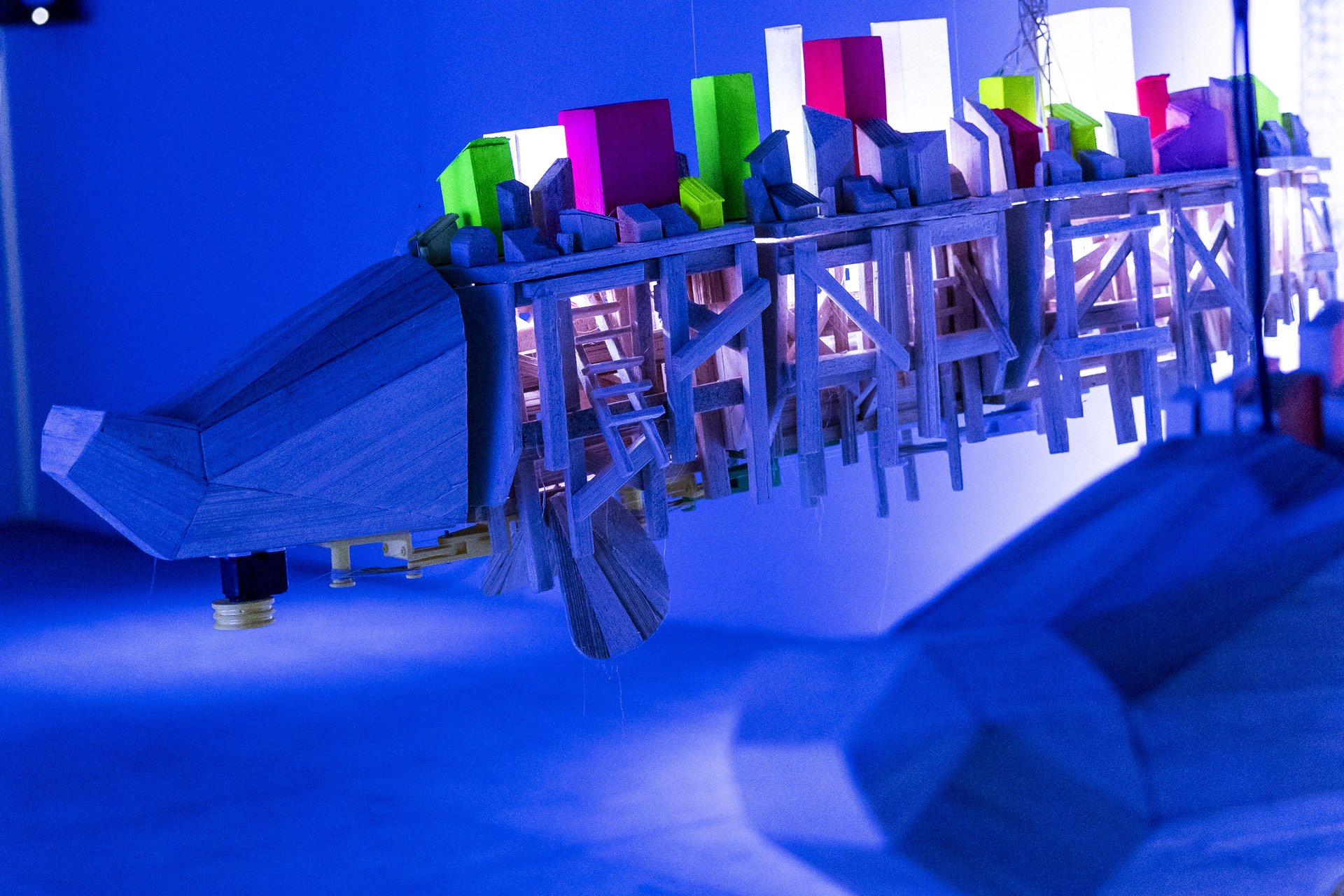
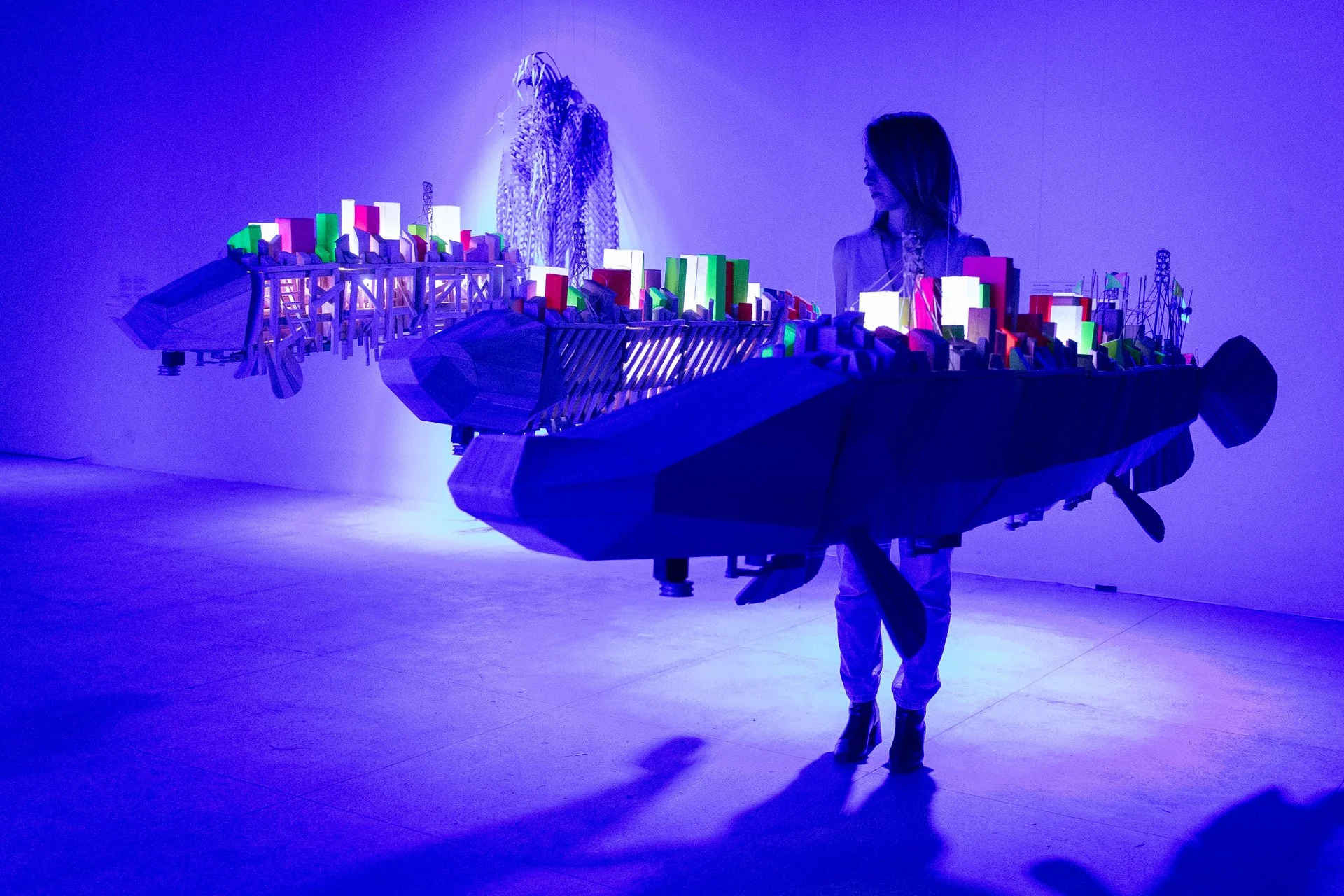
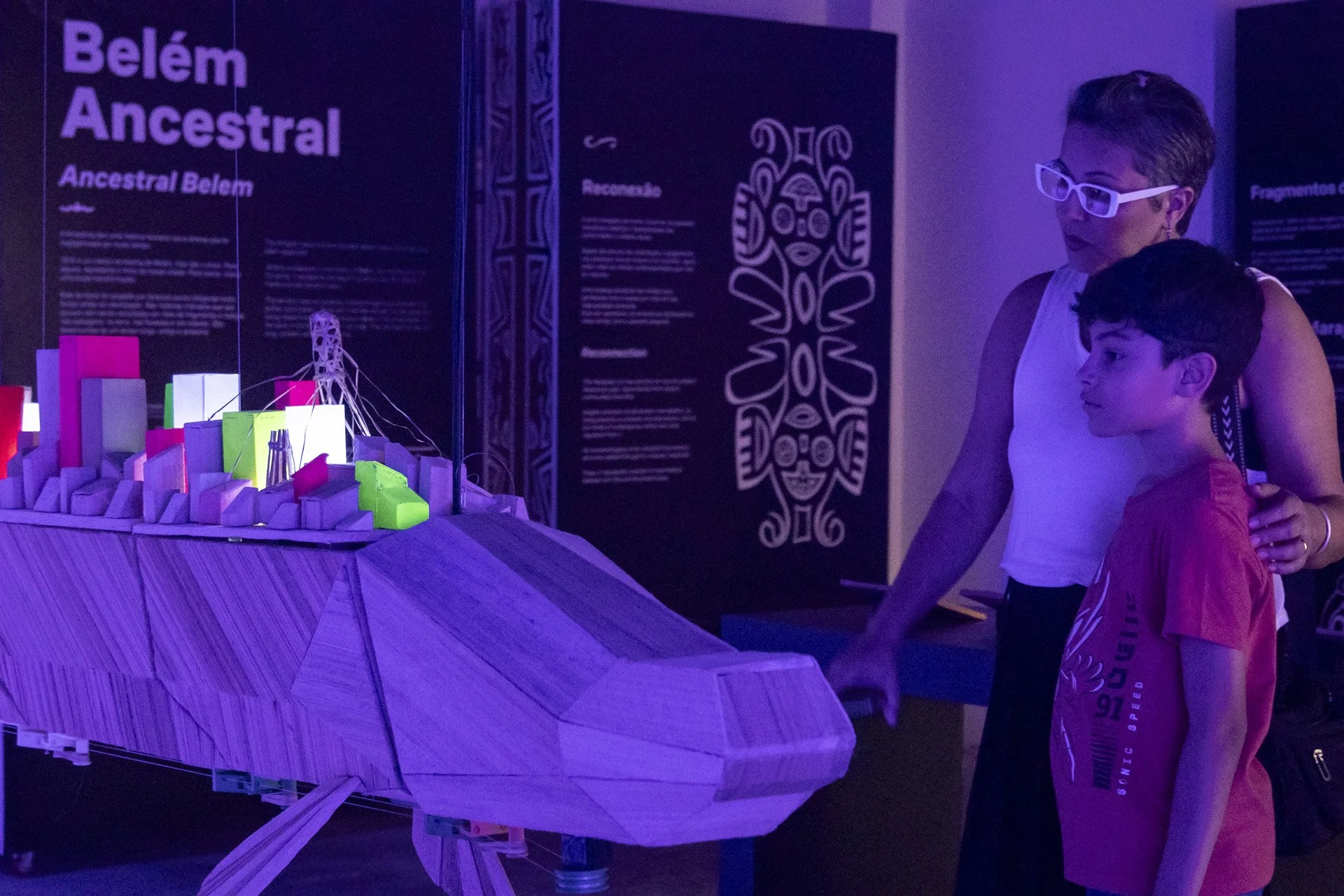
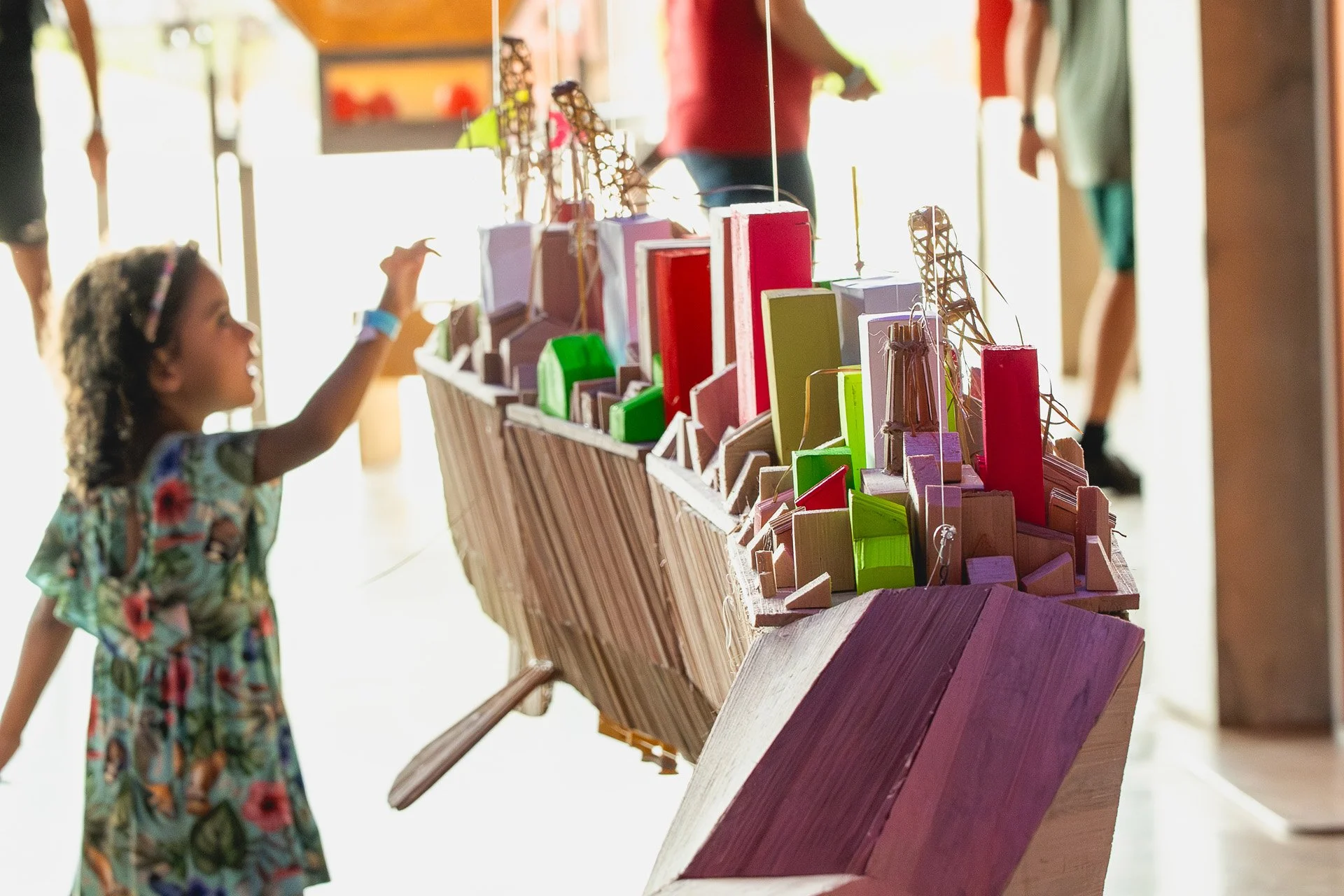
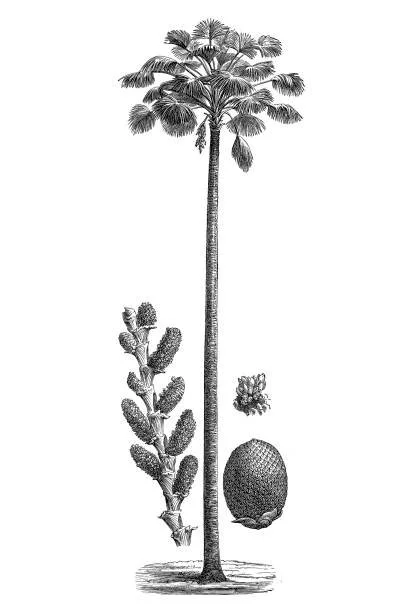
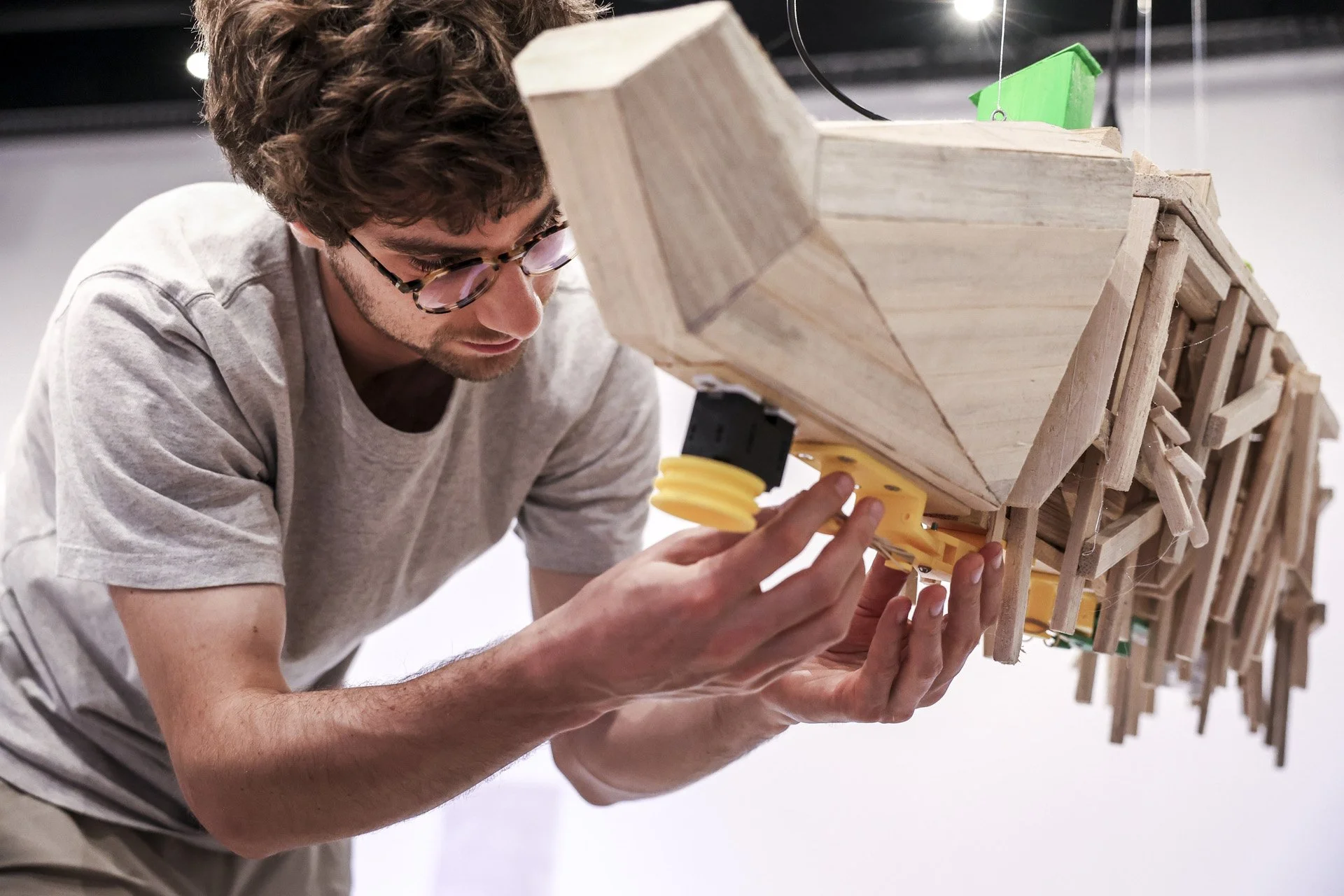
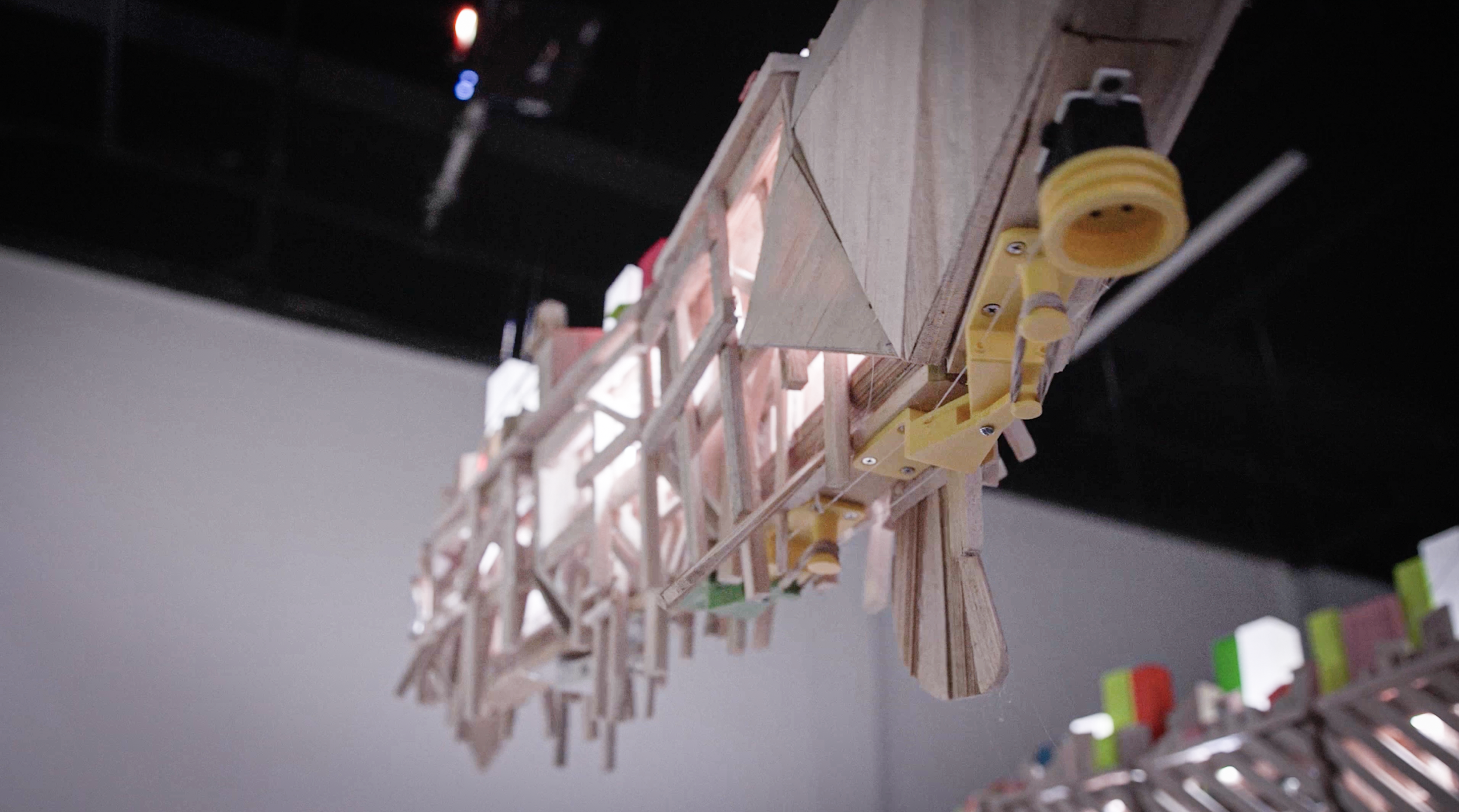
This piece brings together traditional miriti (Mauritia flexuosa) wood sculpture and an underactuated electromechanical system inspired by the pirarucu fish (Arapaima gigas). Known for its vast body and slow, powerful undulation, the pirarucu symbolizes strength and grace.
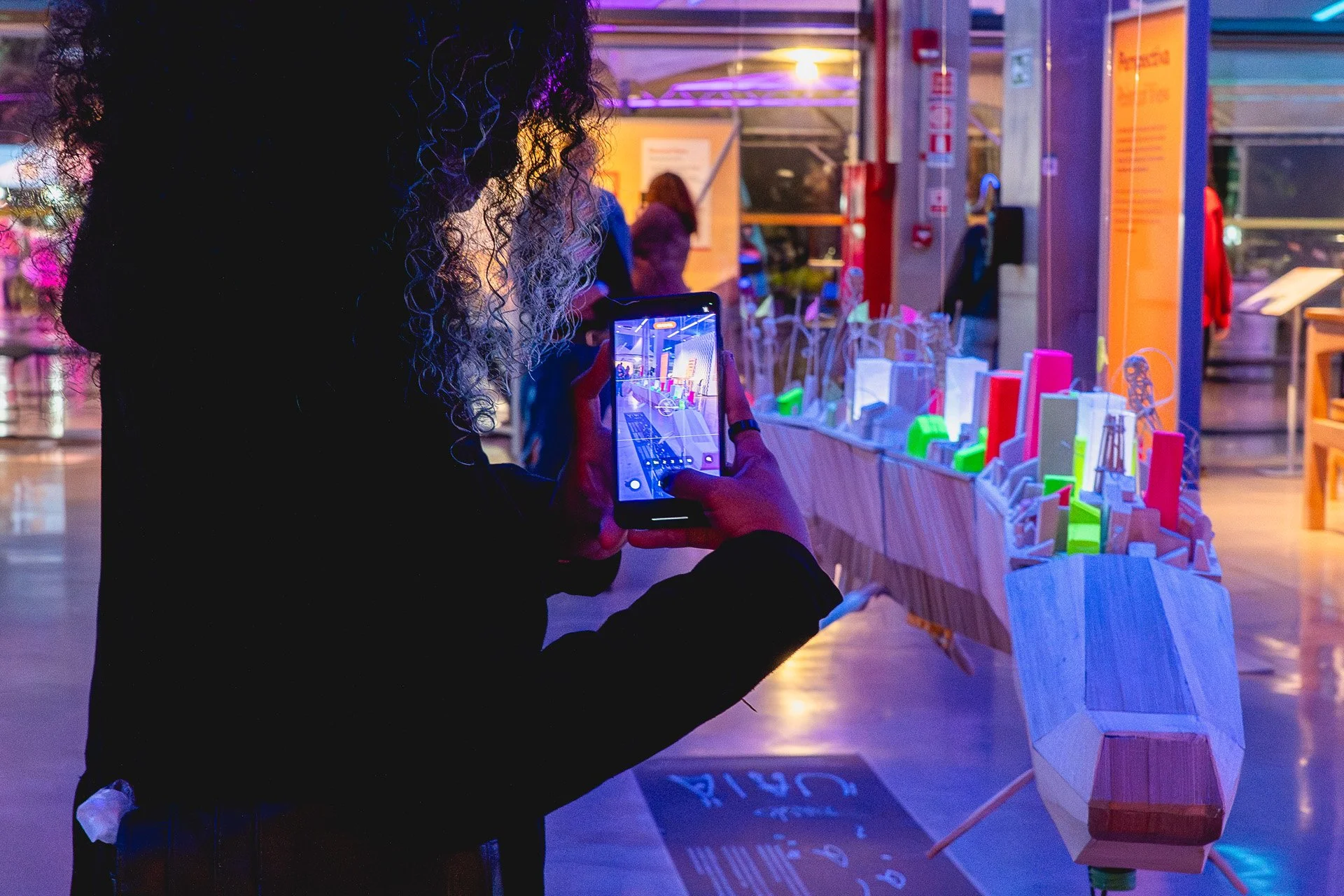
The installation proposes an alternative genealogy of robotics, in which hyper-local material knowledge and ancestral craft inform emerging technologies and generate new imaginaries of motion and future worlds.
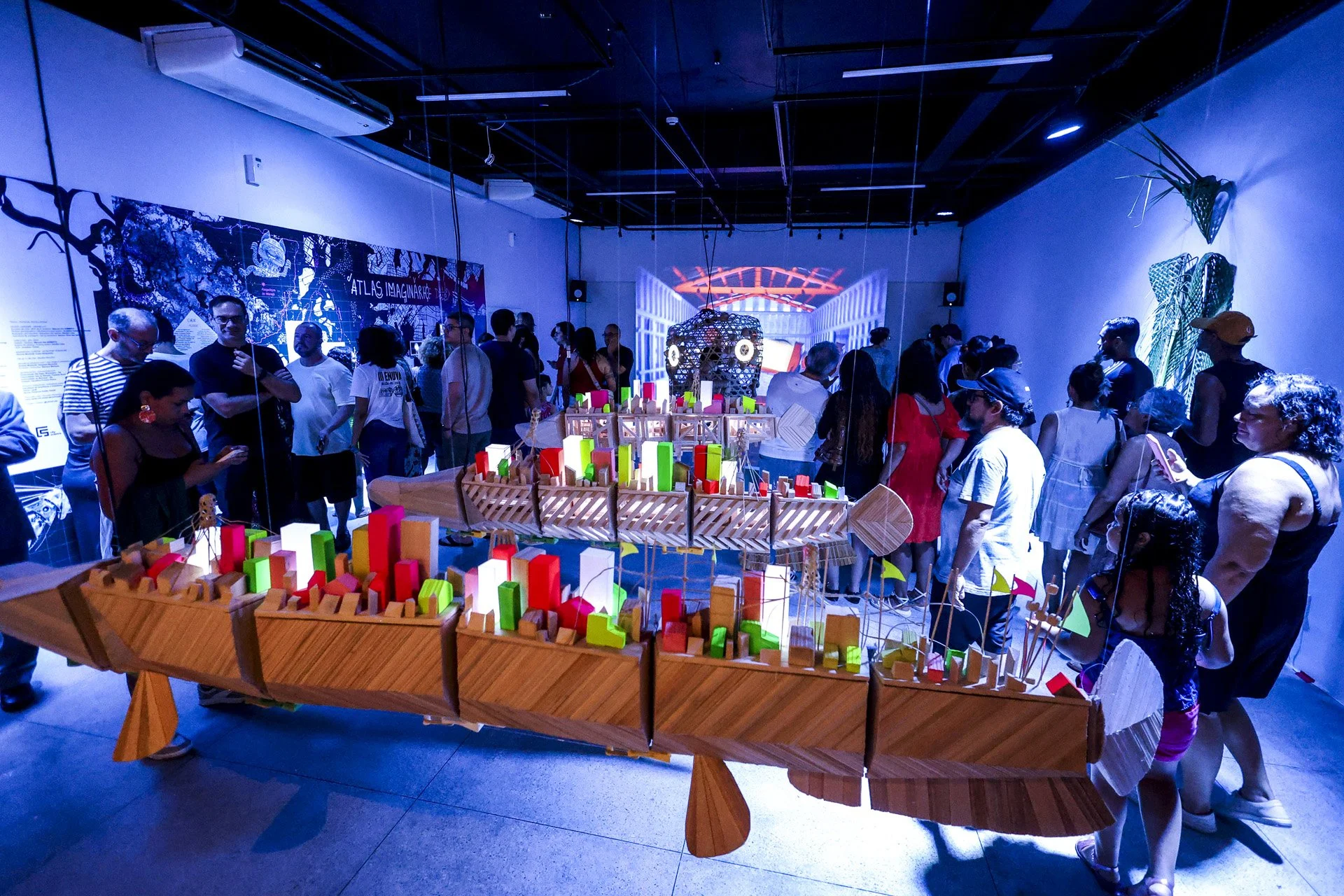
The work represents the Swarm Cities speculative ecology and forms part of aj art-based research line within the Imaginary Atlas, Amazônia.
Ancestral and emerging tecnologies moving together
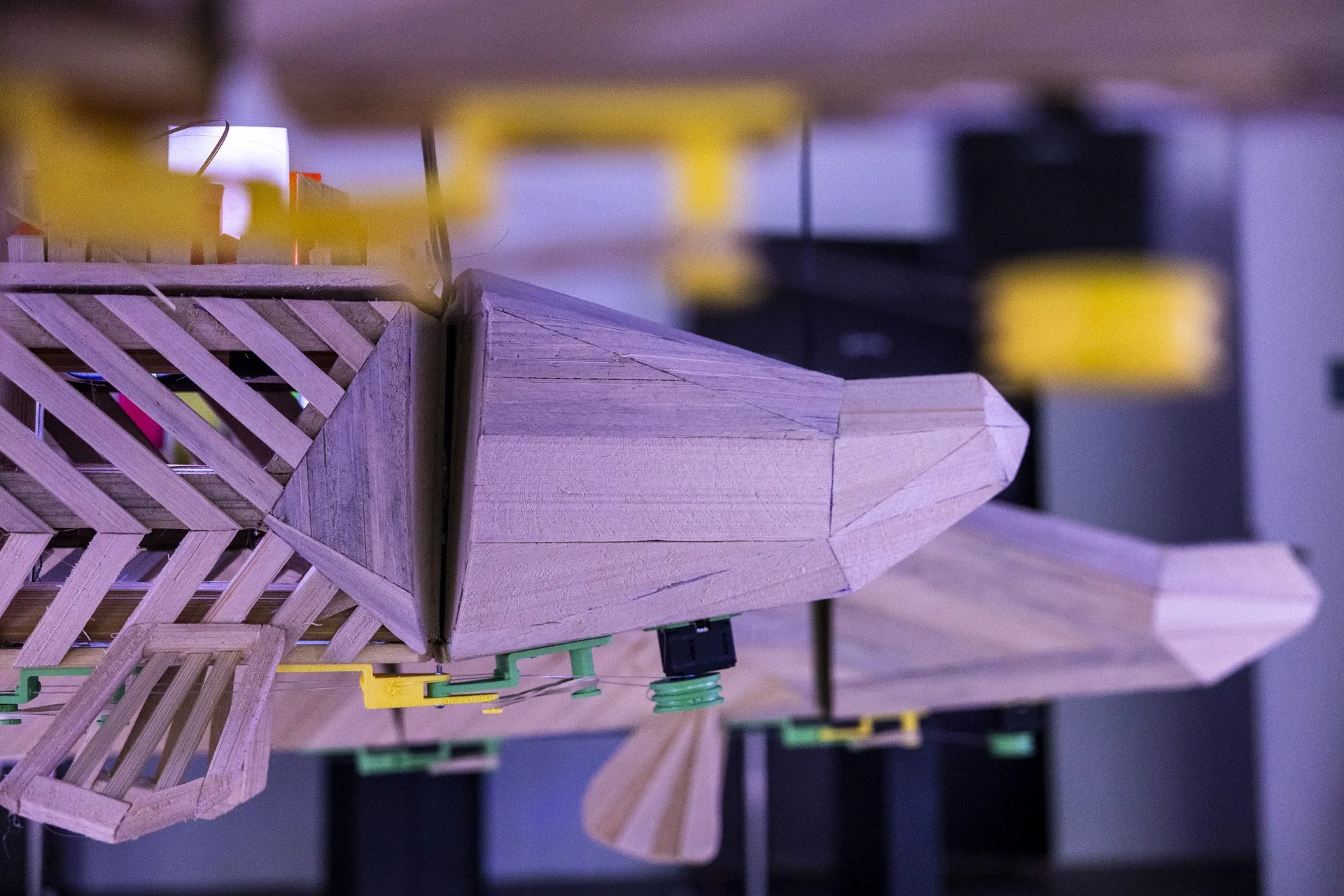
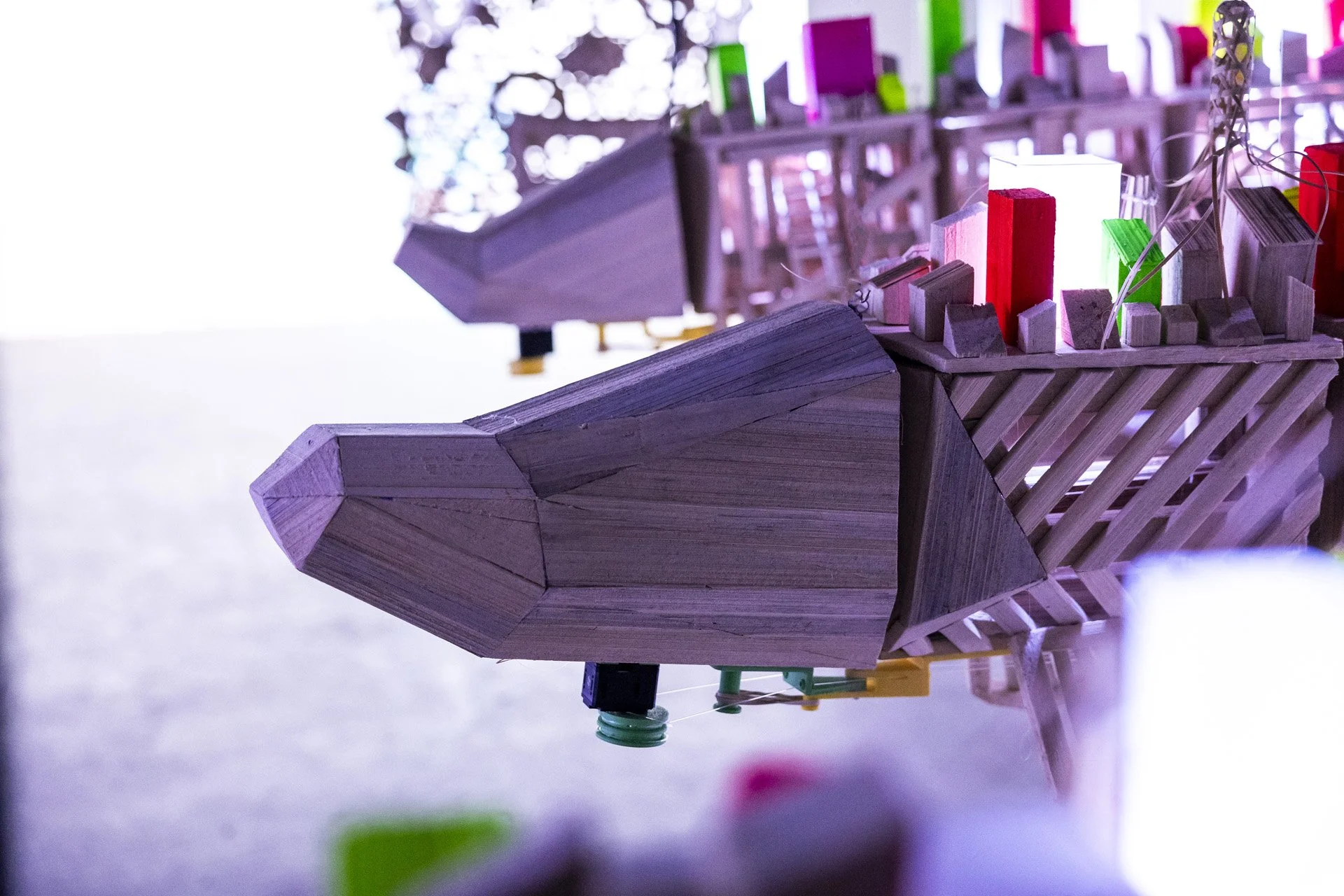
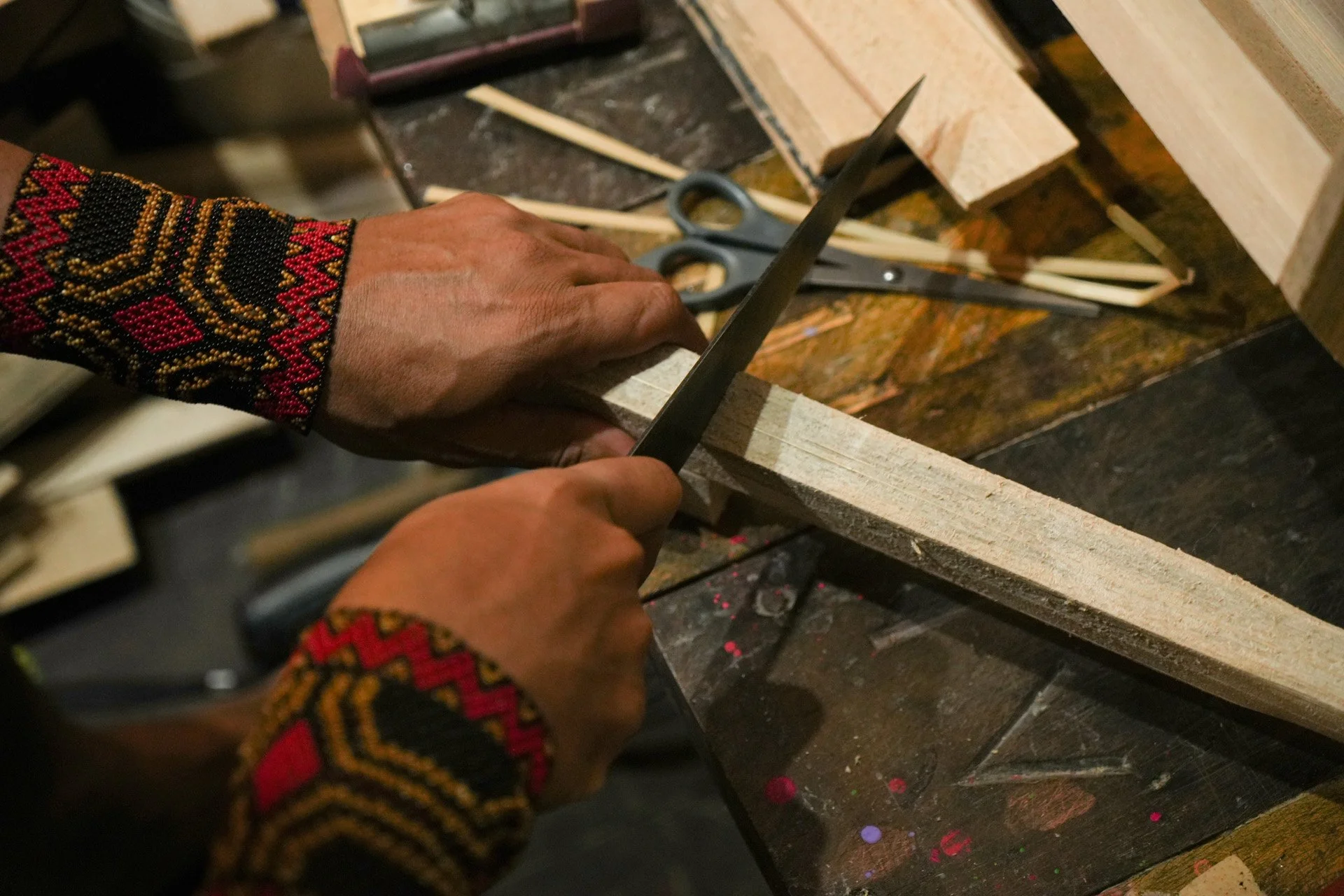
Miriti is an ancestral material found along Amazonian riverbanks and deeply embedded in local craft traditions. Lightweight and porous, it carries the embodied knowledge of communities shaped by water, movement, and seasonal change. In this installation, miriti is not used symbolically but structurally: its material properties and craft logic determine form, balance, and motion, directly shaping how the robotic body behaves.
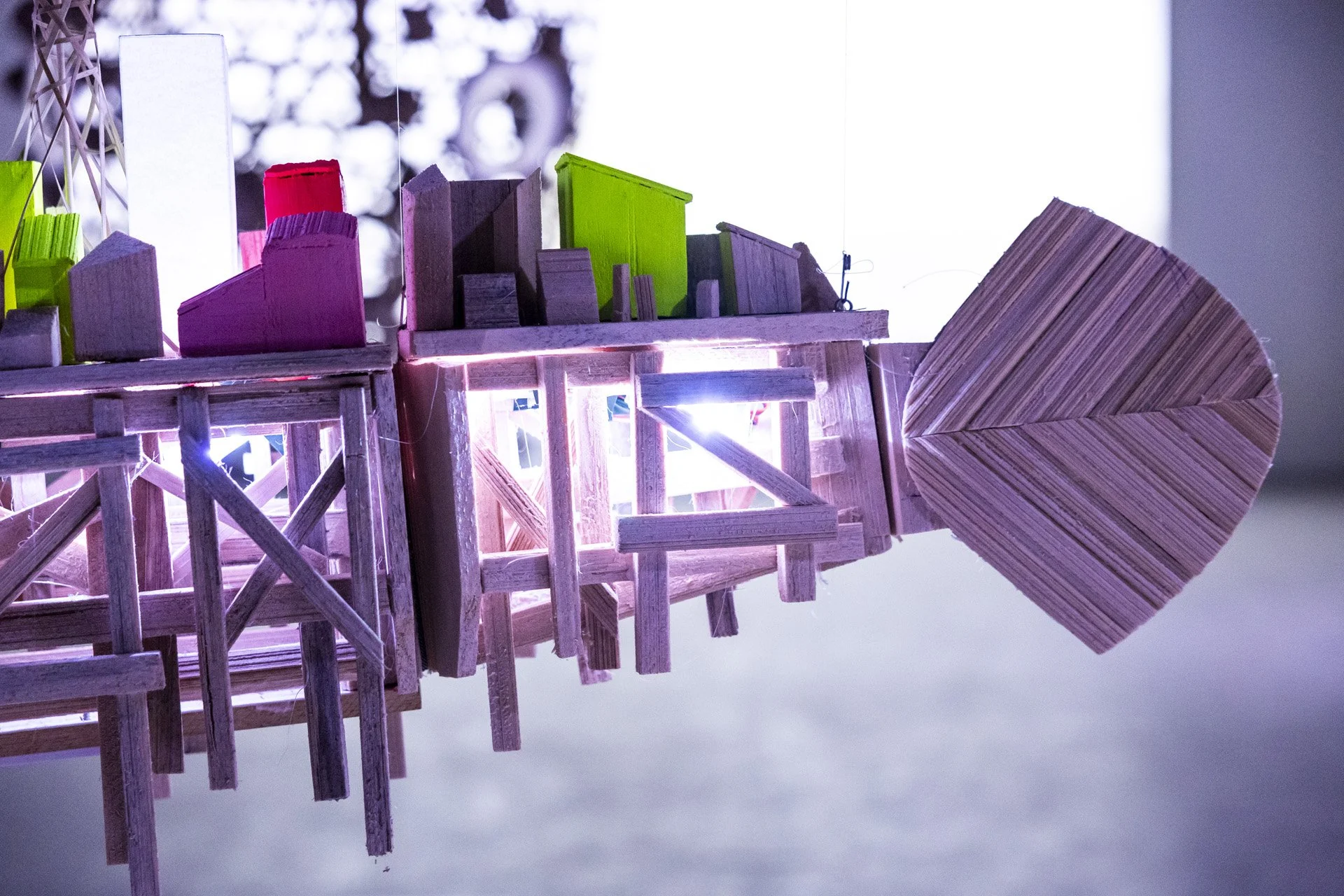
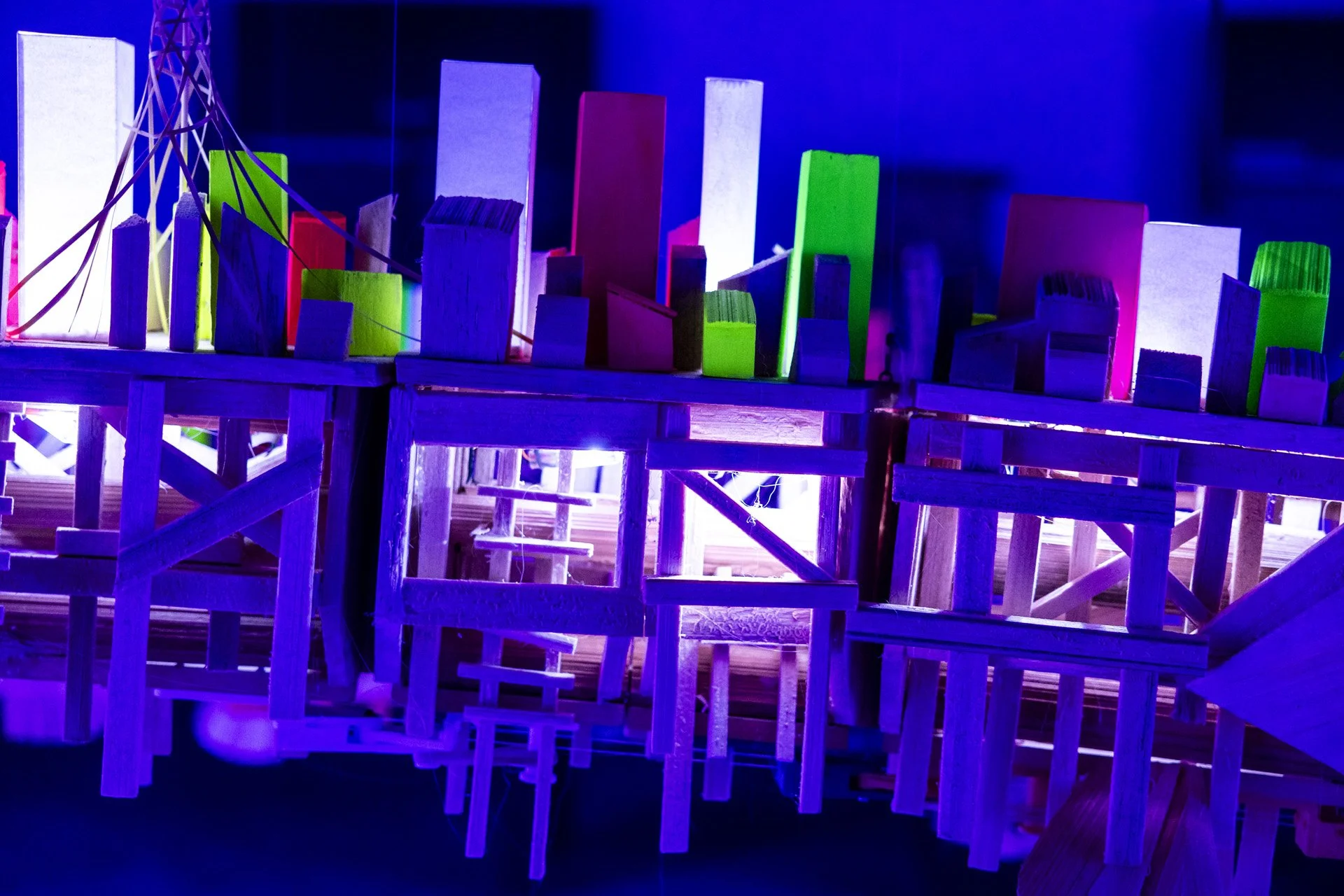
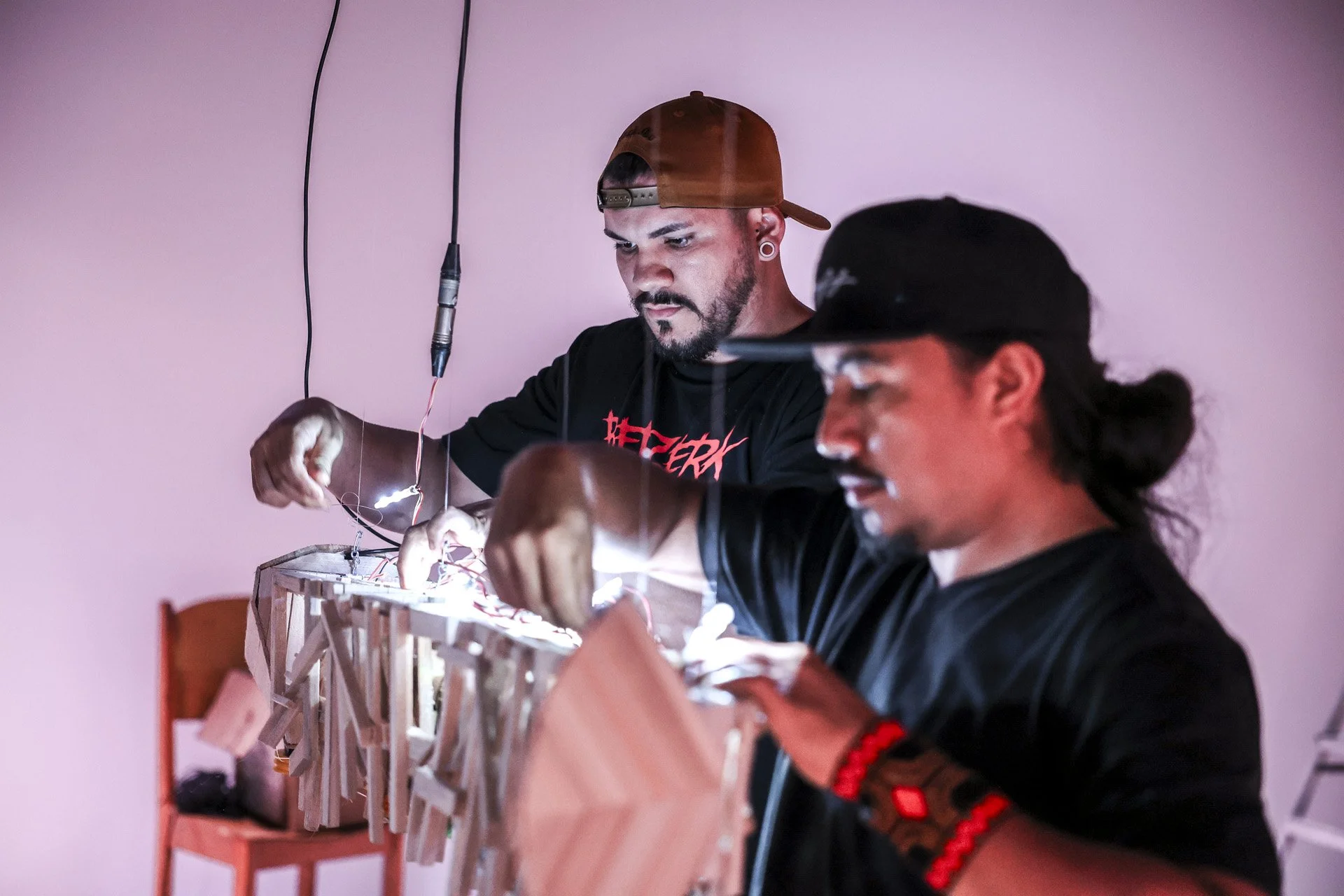
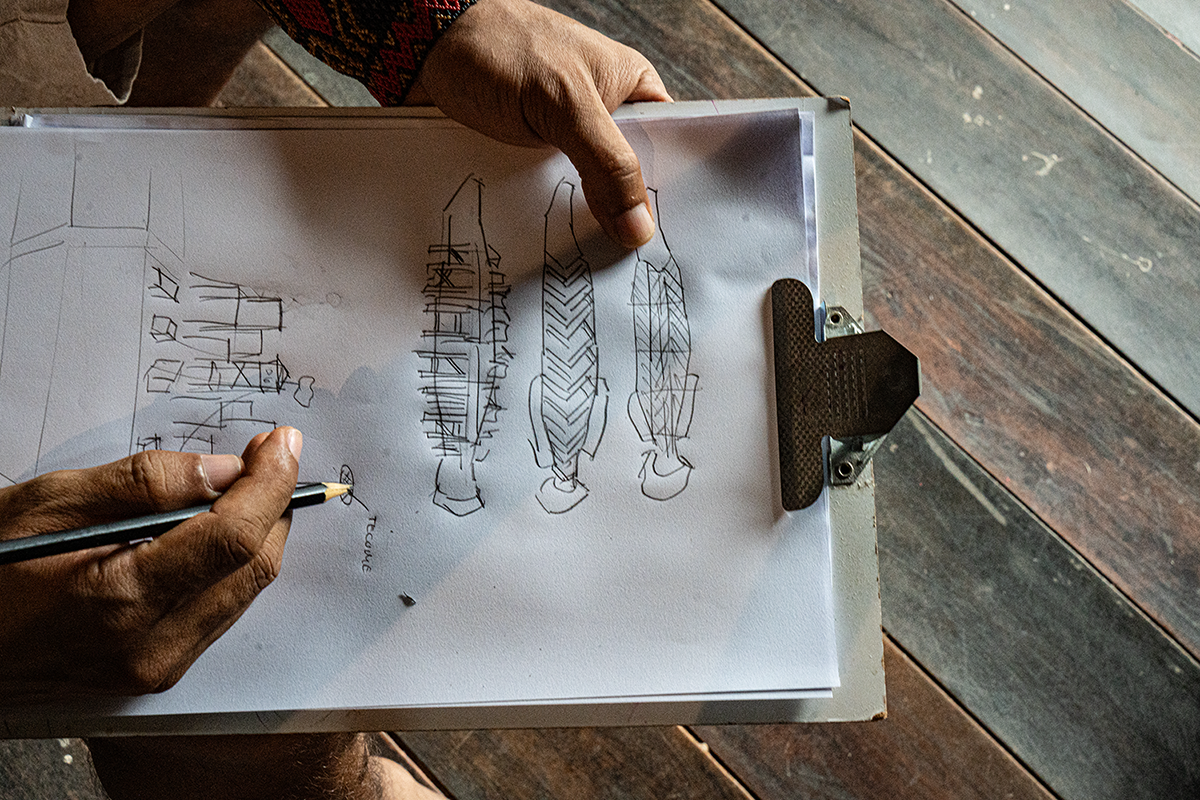
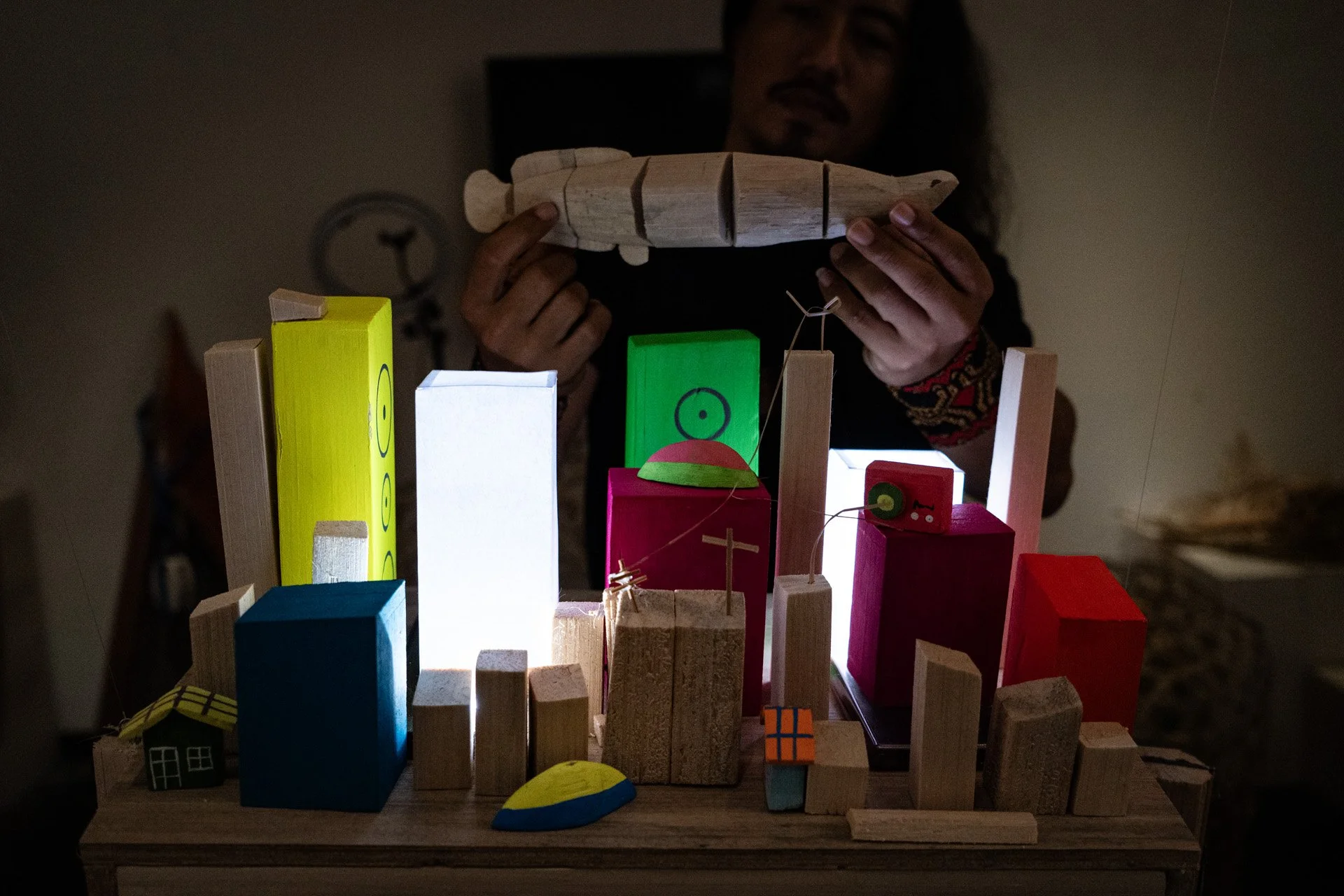
The main fish body was designed by Amazonian artist Marcelo Vaz, drawing from traditional articulated miriti toys that use embedded fabric joints to gently propagate movement. Beneath the structure, an electromechanical system translates the pirarucu’s anatomy into a choreography of tension and elasticity. Small motors act like muscles, pulling thread tendons and elastic elements that balance force and rest, allowing the body to undulate slowly and continuously. Rather than imposing motion, the system responds to the miriti itself, amplifying its material intelligence and producing rhythms shaped by water, gravity, and time.
Swarm Cities
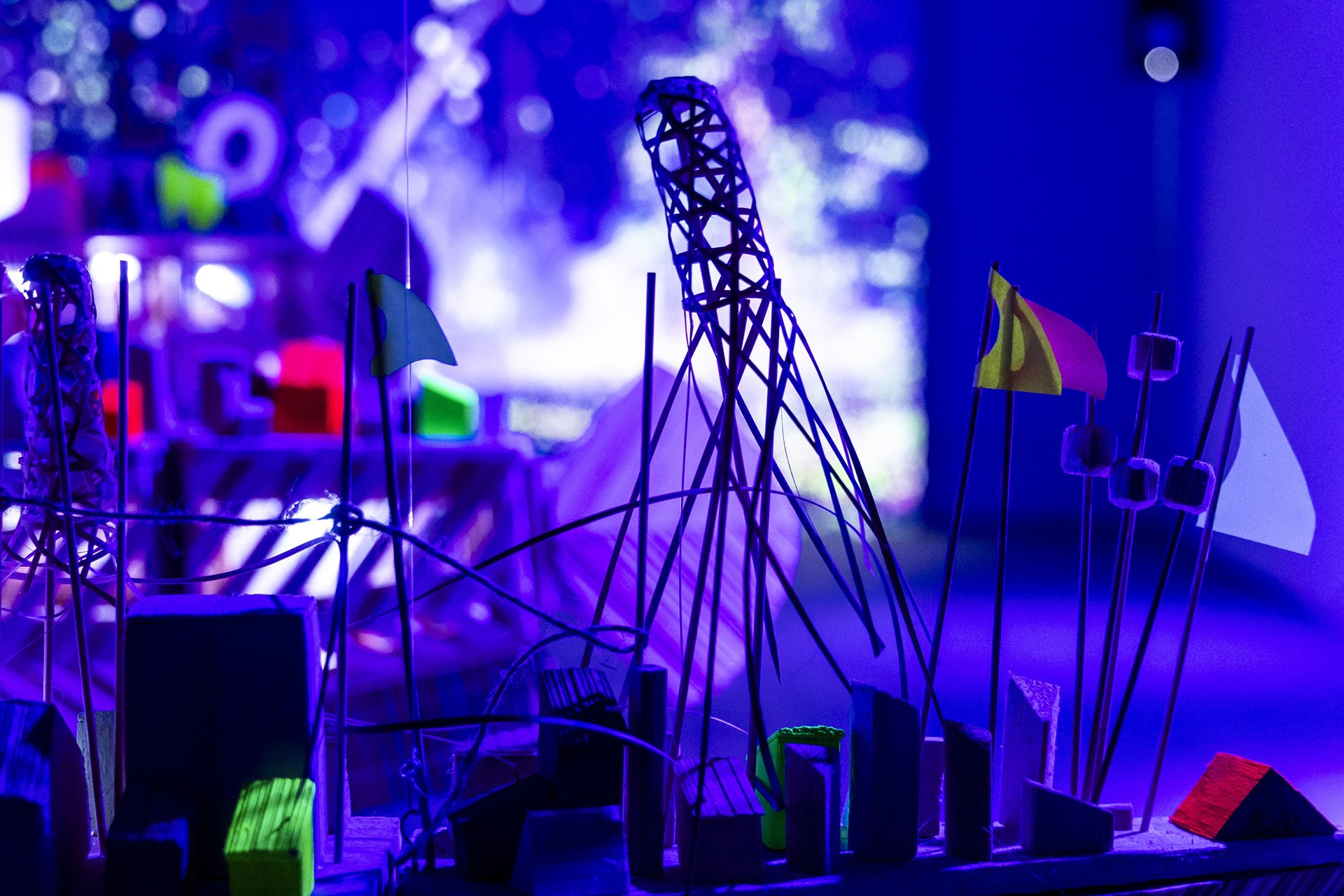
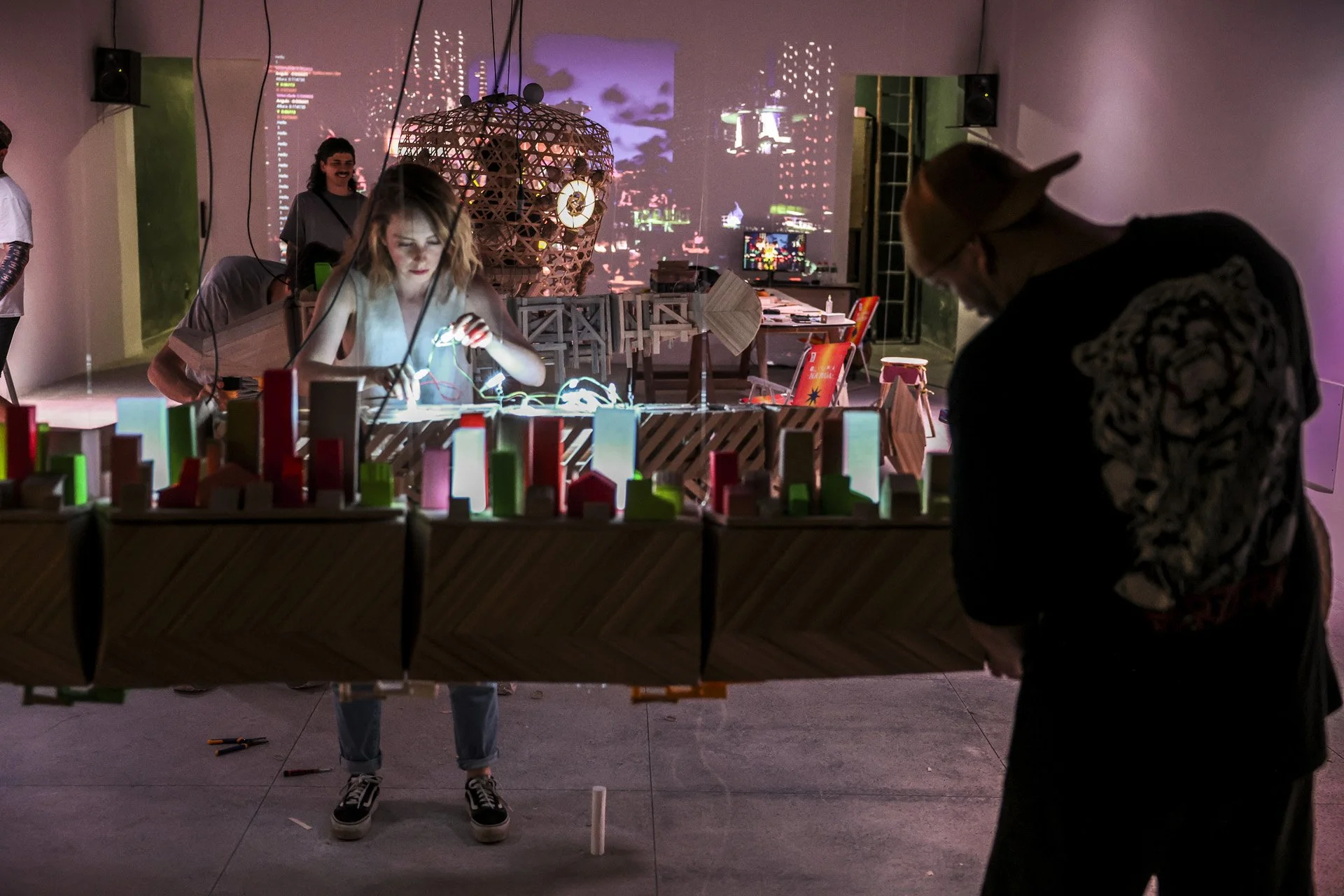
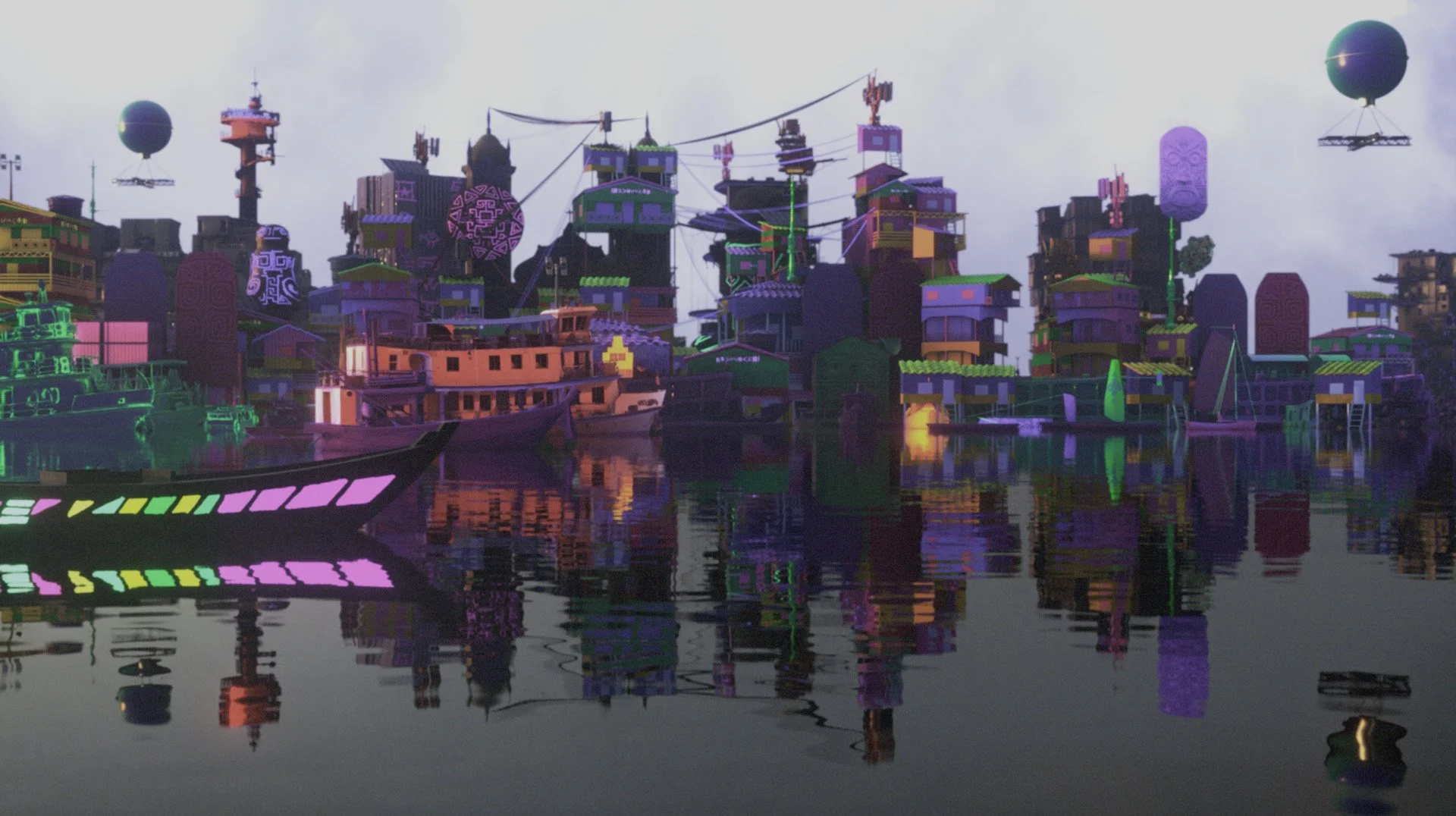
Within the narrative of Imaginary Atlas, Amazônia, these kinetic sculptures represent Swarm Cities that emerge in the year 2125: floating urban communities that carry people, stories, and technologies across flooded territories. Sometimes anchored, sometimes adrift, they travel between the open sea and the islands of submerged rivers. Heirs to stilt-house settlements, these cities no longer symbolize scarcity or precarity, but freedom. Here, mobility is not escape, but choice, guided by the rhythm of the river, the wind, and time.
Ancestral Robots was developed by the MIT City Science group , Quanta Novas Fronteiras and DIMIRITI
Exhibited at: COP30 - Forum Landi (Belém do Pará, BR) and SESI Lab (Brasilia, BR)
Project Directors: Gabriela Bìlá and Diogo Costa Pinto
Miriti Design and Building: Marcelo Vaz (DIMIRITI)
Electromechanical System: Jonathan Cohen, Kye Shimizu
Interactive LED Lighting: Dimitre Lima
Exhibit Production | Production: Mariana Marques / Exhibition set up: Alexandre Afonso Mota and OKA Studio (Belém), Isis Passos (Brasília)
Exhibit Documentation | COP30: Raoni Figueiredo (video), Bruno Carachesti (photo) / Sesi Lab: Vitor Mesquita (video), Naiara Pontes (photo)
Made possible with support of Rumos Itau Cultural, FAC - Fundo de Apoio a Cultura do DF, MIT Center for Art, Science & Technology (CAST).